
Chat
|||
Precision parts

CNC machining of difficult-to-machine materials

Reading time 2 Minuten

Mann mit Brille und weißem Hemd vor blauem Hintergrund.

From Rainer Elfring

Published: 11.07.2018

Updated: 11.07.2018

Share

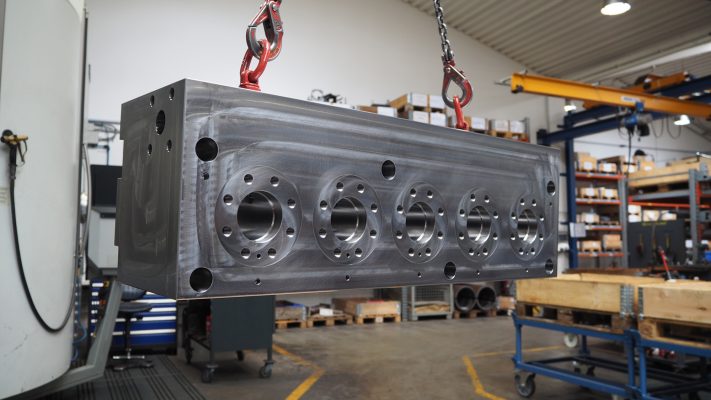
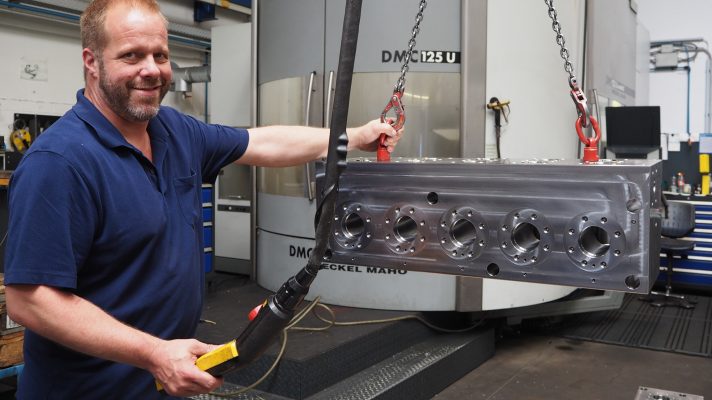
“Some CNC parts really deserve to be called reference projects. Just like this pump head housing made from difficult-to-machine stainless steel,” says a delighted Marius Bücker, contact person for CNC Machining at SPALECK.

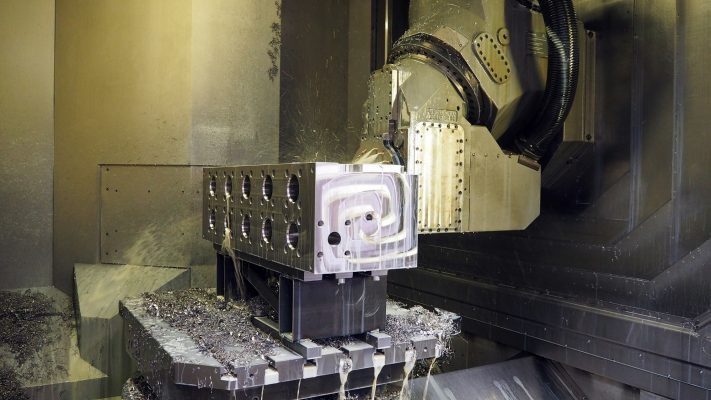
“It’s great to see how a high-performance component for our end customer is turned and milled from a block of material that is difficult to machine,” continues Marius Bücker.

As a supplier of CNC parts, we generally differentiate between the materials used according to their machinability. This is usually divided into good, medium and difficult machinability. As the difficulty of the material increases, so do the requirements for Machining and CNC production.

Roller-burnished holes – so that everything runs smoothly

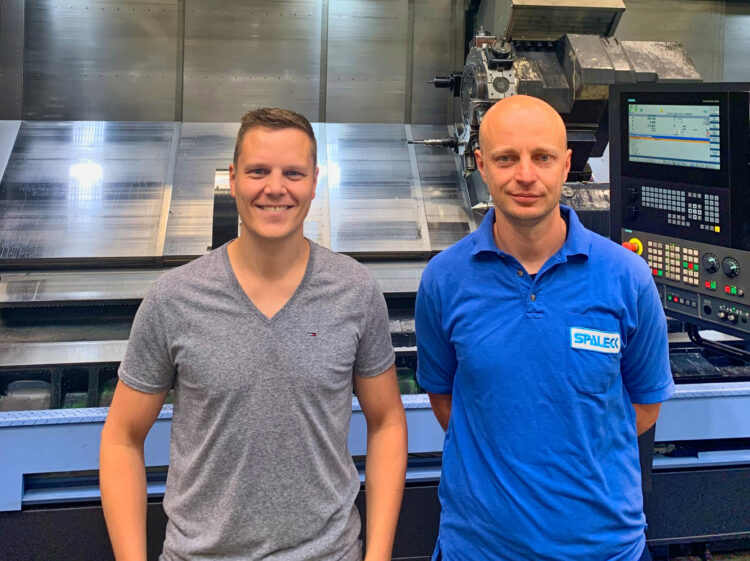
“The requirements for this CNC part were particularly high. That’s because our end customer needed a 360-degree machined CNC part of the highest quality,” adds Guido Haneder, a machinist at SPALECK. Ultimately, the finished CNC part—which features numerous intersecting cross-drilled holes—will later play a central role in large pumps. To ensure that the pistons operate reliably throughout their entire service life, rolled bores were created during the Machining process, among other measures.

Marius Bücker: “As a supplier of CNC parts, we advise our customers on the optimum Machining for each part. This means they can be absolutely certain that the component we produce will have excellent running properties and an above-average service life despite poor machinability.” For this customer’s highly safety-relevant production part, all the required tolerances were therefore checked using SPALECK 3D measurement and confirmed in a test certificate.

Here you will find further topics relating to turned parts and milled parts.
[contact_info contact=”1215″]

[/contact_info]
Share

About the author

Mann mit Brille und weißem Hemd vor blauem Hintergrund.

Rainer Elfring

You may also be interested in these blog posts

Frequently asked questions

The precise design of a tension-shaft screening machine is always tailored to the recycled material. Factors such as the composition of the input material, its moisture content, contaminants, throughput requirements, and the recycling goals associated with the input material form the basis for this. Working with you, we define screening sizes, purity requirements, and throughput rates, and use this information to configure the exact machine settings—from screening panels to amplitude and machine features such as the SPALECK FineSideCOVER (FSC) or our MultiDECK technology with a split push rod. Learn more here about our ModularDESIGN+ concept, which we use to find the optimal screening machine for your material. We’d be happy to test the respective recycling material together with you free of charge at the SPALECK TestCenter.

Precise screening of the fine fraction results in clearly defined particle sizes. For example, if the fine fraction ranging from 0 to 10 mm is reliably screened out, downstream sorting equipment—such as eddy current separators, NIR sorters, sensor sorters, and X-ray sorters—operates more reliably and efficiently as a result. In addition, the system’s cleaning requirements are reduced, and higher material purity levels can be achieved. You can see a good example of the benefits of a tensioned-shaft screen in the reference video on municipal solid waste processing at our Swedish customer Tekniska verken. The video demonstrates how a SPALECK tension-shaft screen reduces the load on the downstream eddy current sorters and NIR sorting processes. You can find all the details about the project here.

The service life of screening mats for Flip-Flow screening machines depends heavily on the recycled material, the Recycling process, and factors such as the abrasiveness of the material stream. In many recycling applications, very long service lives are possible. Thanks to our bolt-free, modular clamping system, individual screening mats can be replaced quickly and easily as needed. You can see how this works in the video on our landing page for tension-shaft screen machines. You can get a competitive quote for replacement screening mats through our spare parts service.

READY FOR BETTER SCREENING

Together, we optimize your recycling process