Precise Fine Screening in Recycling
Tension-shaft screens, also known as Flip-Flow screens, enable the cost-effective classification of materials that are difficult to screen, with separation sizes ranging from 0.2 to approximately 50 mm.
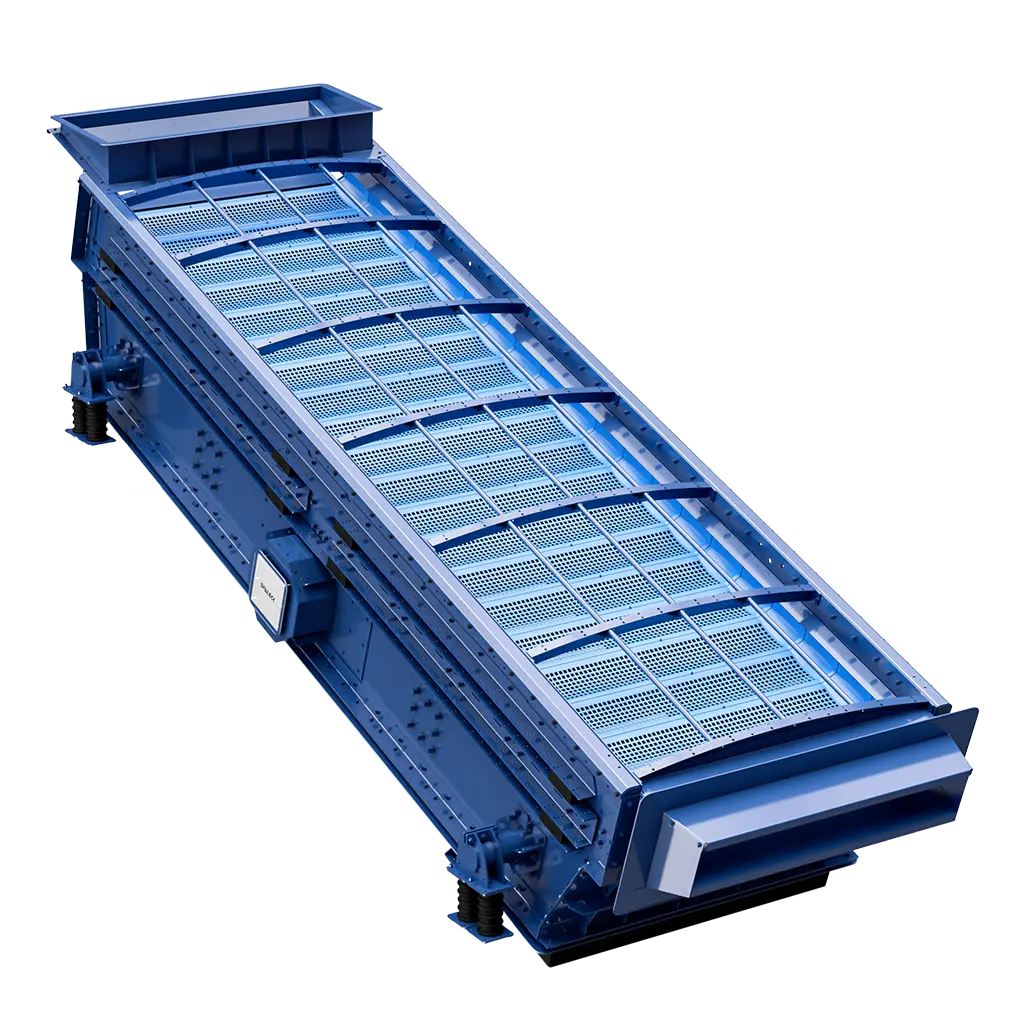
SPALECK tension-shaft machines are recognized worldwide for their advanced tension-shaft screening technology, which enables the cost-effective separation of fine particles from recycled materials. They precisely separate material streams into three to four clearly defined size fractions and deliver consistent, high-quality screening results—even with wet, sticky, or highly heterogeneous material streams.
The operating principle is based on two frame systems that move relative to each other, with elastically tensioned screen mats. The dynamic, high-frequency tensioning and releasing motion of the mats creates what is known as a “trampoline effect.” The recycled material is actively loosened, and the target fractions fall through the openings in the screen mats.
This ensures that fine particles are reliably screened out and material streams are precisely graded—an important prerequisite for efficient sorting and cost-effective recycling processes.
You are currently viewing a placeholder content from YouTube. To access the actual content, click the button below. Please note that doing so will share data with third-party providers.
More InformationOur screening machine experts will be happy to advise you on how to make the best use of a tensioned-shaft screen in your processing operation. Just give us a call or chat with us.

MATERIAL
FRACTIONS
DESIGN+
Screening machines must be reliable and powerful. With our tension-shaft screens, you can optimize the processing of your screened material. The machine output guarantees a strong performance of your recycling system.
Designed and built for cost-effective screening. SPALECK flip-flow screens set the standard worldwide in terms of economy, reliability and efficiency.
Our ModularDESIGN+ principle ensures that every SPALECK tension-shaft screen is optimally designed for the specific material and recycling process.
Parameters such as screen linings, cut-off lines, and machine configuration are tailored to each specific project.
At the same time, the machine remains flexible: Changes in material flows or new requirements can be easily accommodated in the future as well.
The video shows how tension shaft cassettes can specifically improve screening results.
You are currently viewing a placeholder content from YouTube. To access the actual content, click the button below. Please note that doing so will share data with third-party providers.
More InformationDon’t just buy an off-the-shelf tension-shaft screen—choose the best solution for your screening needs.
We build each and every one of our screening machines 100% tailored to your specific application. This guarantees you the latest screening technology and optimum recycling and reprocessing.

If optimum screening performance, quality and the screening result are what count for you, then SPALECK expansion shaft technology is just right for you.
If you are interested, we will be happy to organize a tour of leading reconditioners who count on SPALECK. Just get in touch with us.
You are currently viewing a placeholder content from YouTube. To access the actual content, click the button below. Please note that doing so will share data with third-party providers.
More InformationSPALECK tensioned-wire screens are ideal for classifying materials that are difficult to screen, sticky, and moist, with size ranges from approximately 0.2 to 50 mm. Here you will find a small selection of typical recycled materials that can be processed using our Flip-Flow screens. In addition, our entire product line of conveying and separation technology is, of course, available to you!


We design and build every SPALECK tension-shaft screen to be 100% tailored to the customer’s specific application. This way, you can be sure that your new tension-shaft screen will optimally classify and screen your material.

Your materials. Your screening machine. This SPALECK principle naturally also applies to films, LVP, RDF, shredded plastics, or PET recycling, for example. The recycling screen is equipped with the best screening media, and its design is optimized to ensure the material spends the optimal amount of time on the deck. In addition, there are useful equipment options, such as dynamic fingers or special screen liners, that help you get the most out of your material.

Typical screen sizes in metal recycling include, for example, 0–8 mm. This efficiently removes minerals, dirt, and moisture. To protect the sorting equipment and ensure optimal processing.
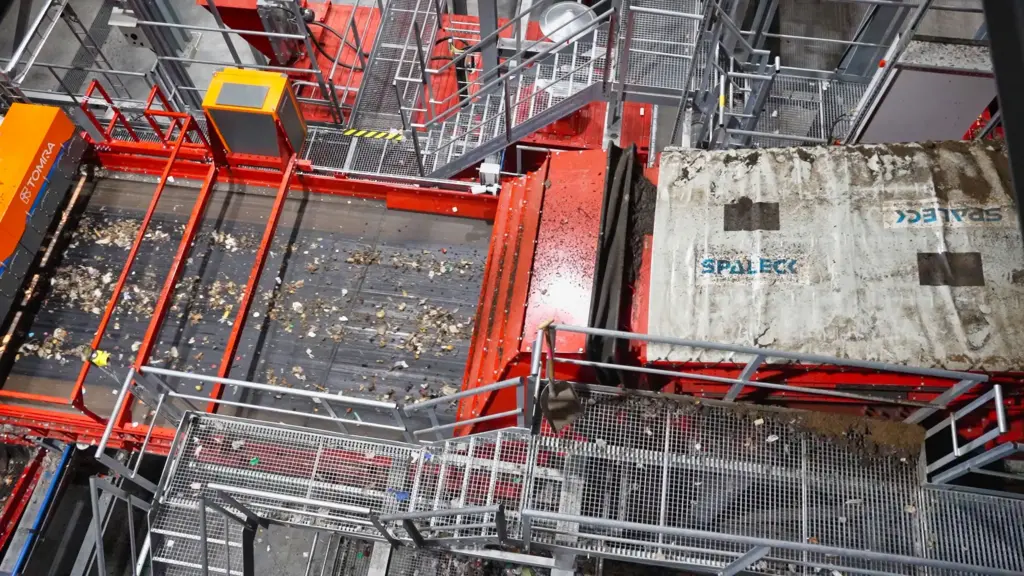
Remove the fine particles; add the recyclables to the sorting bin. Tension-shaft screens are used for separation in municipal solid waste (MSW) applications, for example, upstream of NIR sorting machines.

Flip-Flow screens are used to separate the finest particles from construction and demolition waste. Our customers often use tension-shaft screens for this purpose, or our SPALECK 3D COMBI screening machine, which features a recyclables screen in the upper deck and a tension-shaft screen in the lower deck.

Compost producers use SPALECK tension-shaft screeners to produce the best substrate and the highest-quality compost. Please contact us; we’d be happy to show you our international references.
Iwan Koslow GmbH & Co. KG, Deutschland
Iwan Koslow GmbH & Co. KG, Deutschland
Iwan Koslow GmbH & Co. KG, Deutschland
Iwan Koslow GmbH & Co. KG, Deutschland
Iwan Koslow GmbH & Co. KG, Deutschland
Kaltenkirchener Metallrecycling GmbH, Deutschland
STENA RECYCLING AB, Schweden
STENA RECYCLING AB, Schweden
RECYCLING OWL GmBH, Deutschland
Olde Bolhaar Eco-Service GmbH, Deutschland
Heros Sluiskil, Belgien
Skrotfrag Group, Schweden
SPALECK, Deutschland
Immark AG, Schweiz
SPALECK, Deutschland
Tekniska verken, Schweden
BANZO Engineering, Niederlande
Umweltkontor Bergkamen, Deutschland
BANZO Engineering, Niederlande
Stena Nordic Recycling Center, Schweden
Skrotfrag Group, Schweden
Skrotfrag Group, Schweden
Iwan Koslow GmbH & Co. KG, Deutschland
Iwan Koslow GmbH & Co. KG, Deutschland
Iwan Koslow GmbH & Co. KG, Deutschland
Iwan Koslow GmbH & Co. KG, Deutschland
Iwan Koslow GmbH & Co. KG, Deutschland
Kaltenkirchener Metallrecycling GmbH, Deutschland
STENA RECYCLING AB, Schweden
STENA RECYCLING AB, Schweden
RECYCLING OWL GmBH, Deutschland
Olde Bolhaar Eco-Service GmbH, Deutschland
Heros Sluiskil, Belgien
Skrotfrag Group, Schweden
SPALECK, Deutschland
Immark AG, Schweiz
SPALECK, Deutschland
Tekniska verken, Schweden
BANZO Engineering, Niederlande
Umweltkontor Bergkamen, Deutschland
BANZO Engineering, Niederlande
Stena Nordic Recycling Center, Schweden
Skrotfrag Group, Schweden
Skrotfrag Group, Schweden

Discuss with our experts in screening technology and material feeding
Would you like to learn more about optimal fine screening with tensioned-wire screens? Or do you already have a specific project in mind? Then let’s talk about your material and how it’s screened. I’d also be happy to show you some references and case studies.
Benefit from the targeted selection of your Side wall design. This allows you to achieve the highest screening grades with a high screening capacity or high screening qualities with maximum performance.
SPALECK offers you many smart solutions for screening. Like our patented MultiZONE deck, for example. This provides you with several screening areas on one screening deck. This allows you to easily control the screen quality and flexibly adapt your screen to a wide variety of material flows.
We'll work with you to select the best screen mats for your recycling goals. Hundreds of screen mat configurations are available for a wide variety of materials and cutting patterns.
The clamping mechanism allows for quick and easy replacement of the screen mats.
You are currently viewing a placeholder content from YouTube. To access the actual content, click the button below. Please note that doing so will share data with third-party providers.
More Information Tension-shaft screening machines, also known as flip-flow screens, play a key role in many recycling plants: the reliable and precise classification of material streams with a high proportion of fine particles. They ensure precise cuts and accurate fine screening, especially when dealing with damp, sticky, or difficult-to-process recycled materials. This reduces the load on downstream sorting equipment and ensures that recycling processes are operated cost-effectively. Typical applications range from mixed construction waste, household waste, and waste-to-energy ash to applications in metal and plastic recycling, as well as the processing of compost and organic waste streams.
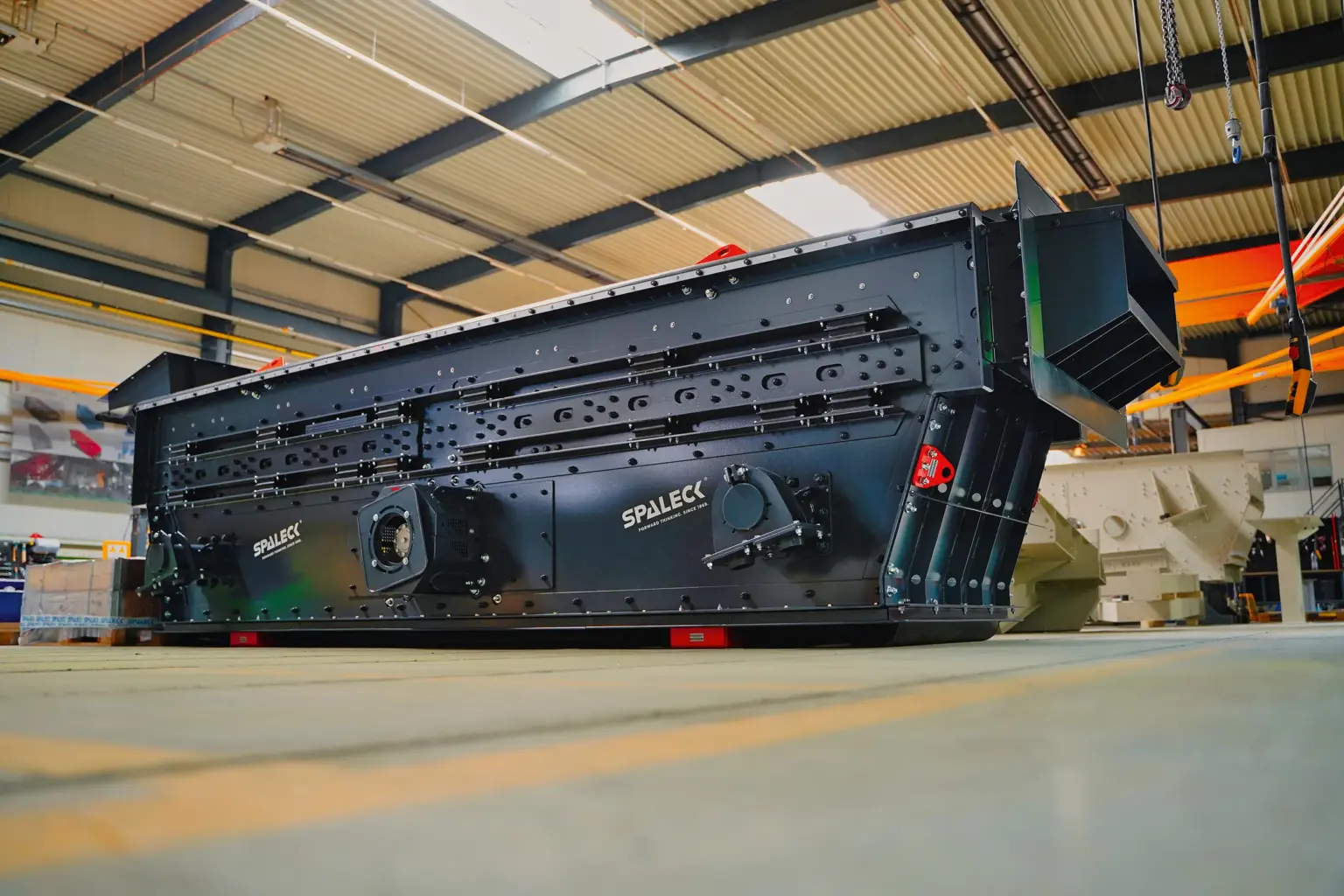
In the recycling of construction debris, tension-wave screens reliably sort mixed construction waste by particle size. The highly heterogeneous and often damp and sticky screening material—consisting of dust, sand, dirt, broken concrete, bricks, glass, and mixed construction waste, as well as wood and plastics—is precisely graded. The tensioned-shaft screening technology helps reduce contamination in the subsequent stages of the process. This has a very positive impact on the subsequent processing and sorting steps. Typical screen sizes include, for example, 0–8 mm or 0–12 mm.
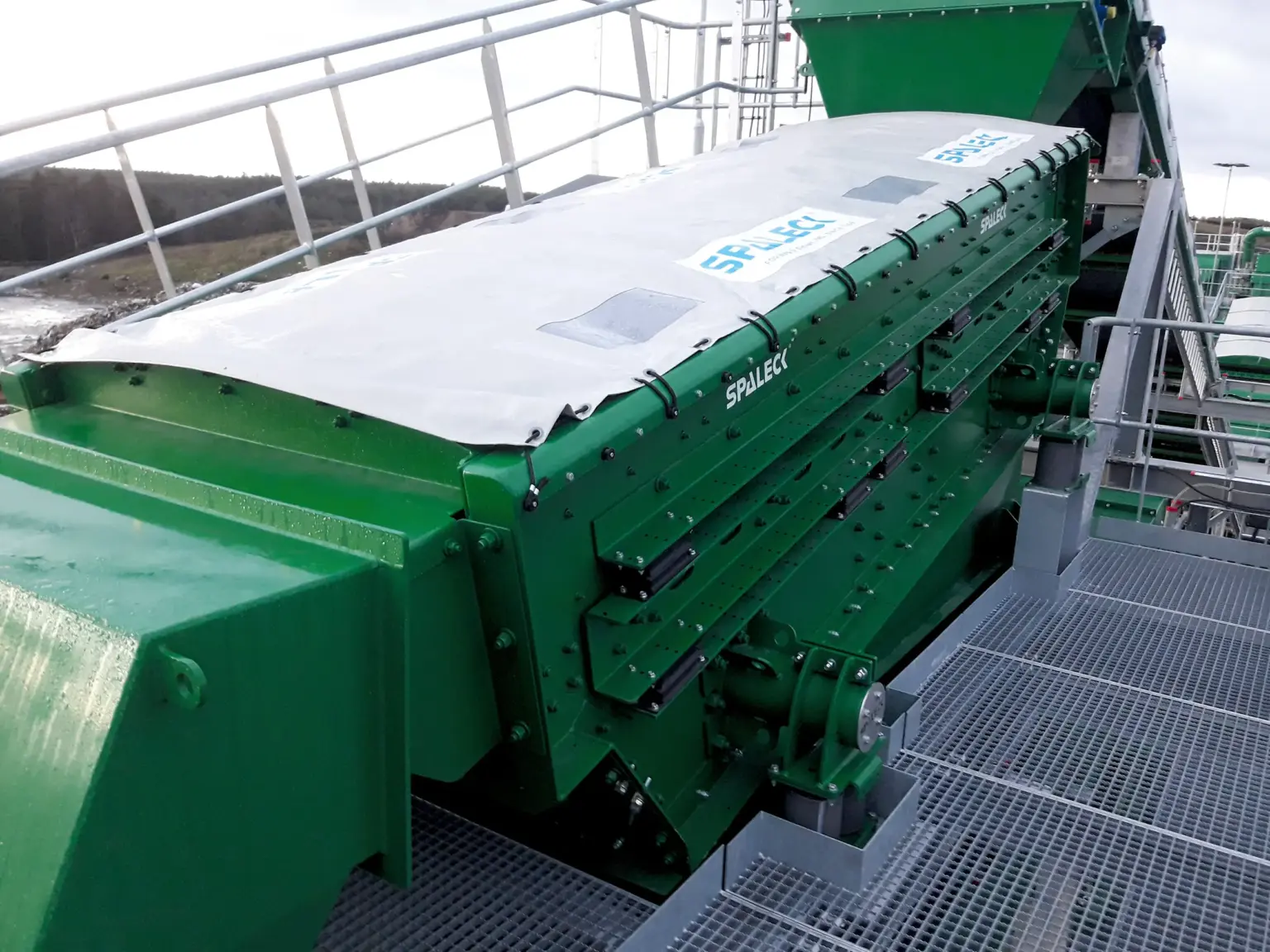
In the recycling of waste incineration ash, tension-shaft screens ensure precise classification of mineral slag and metal-bearing residues, such as non-ferrous concentrates. The material, some of which is very damp and sticky, is reliably sorted into size fractions such as 0–12 mm and 12–50 mm. This ensures that the downstream eddy current sorting and, for example, sensor sorting systems are supplied with optimal grain streams.
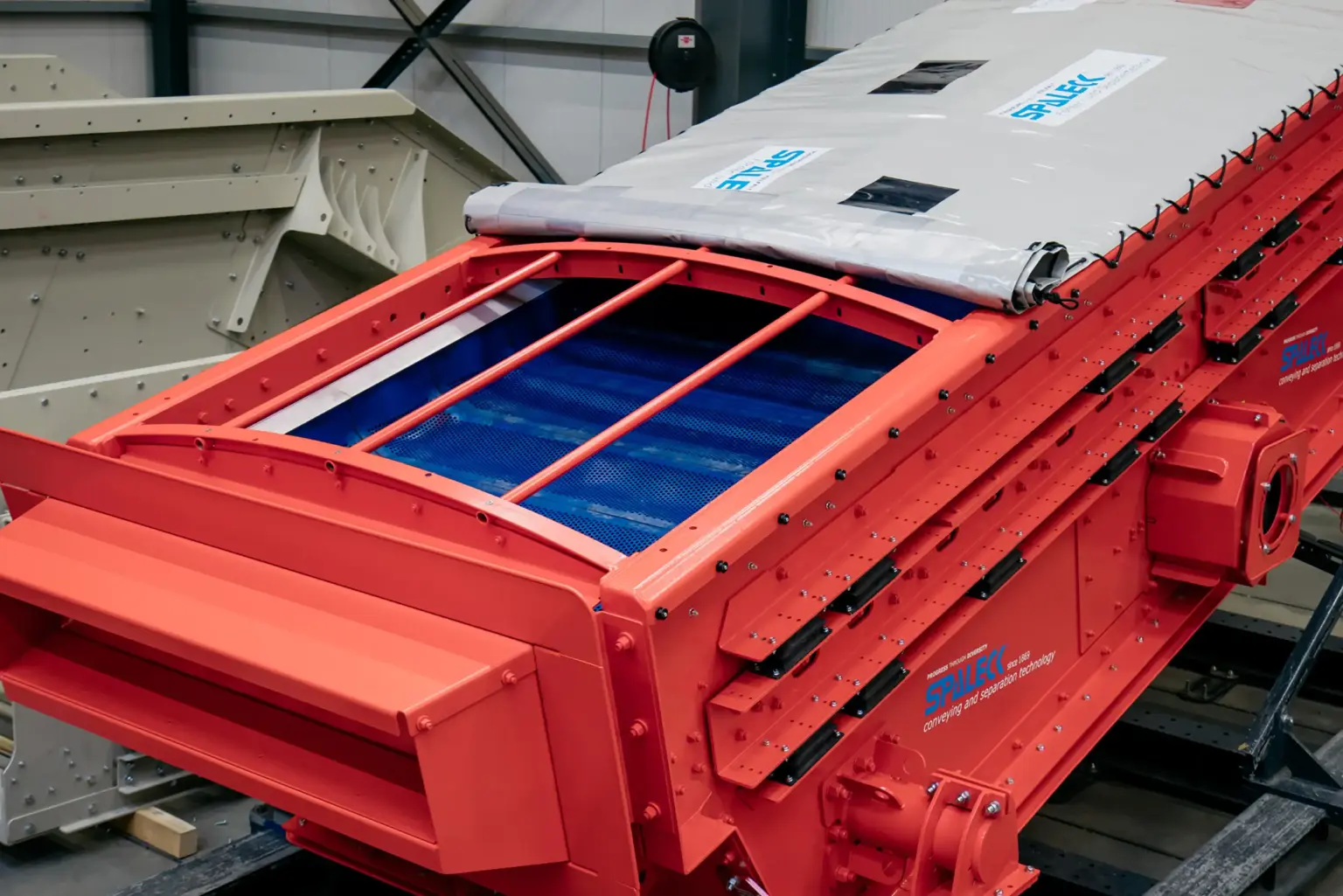
During the processing of mixed packaging waste, tension-shaft screens remove the fine fraction. A typical screen size range is, for example, 0–30 mm and larger than 30 mm. By screening out the fine fraction and separating organic components, sand, dirt, and other materials, downstream sorting systems—such as NIR sorters or air classifiers—can operate much more efficiently and reliably.
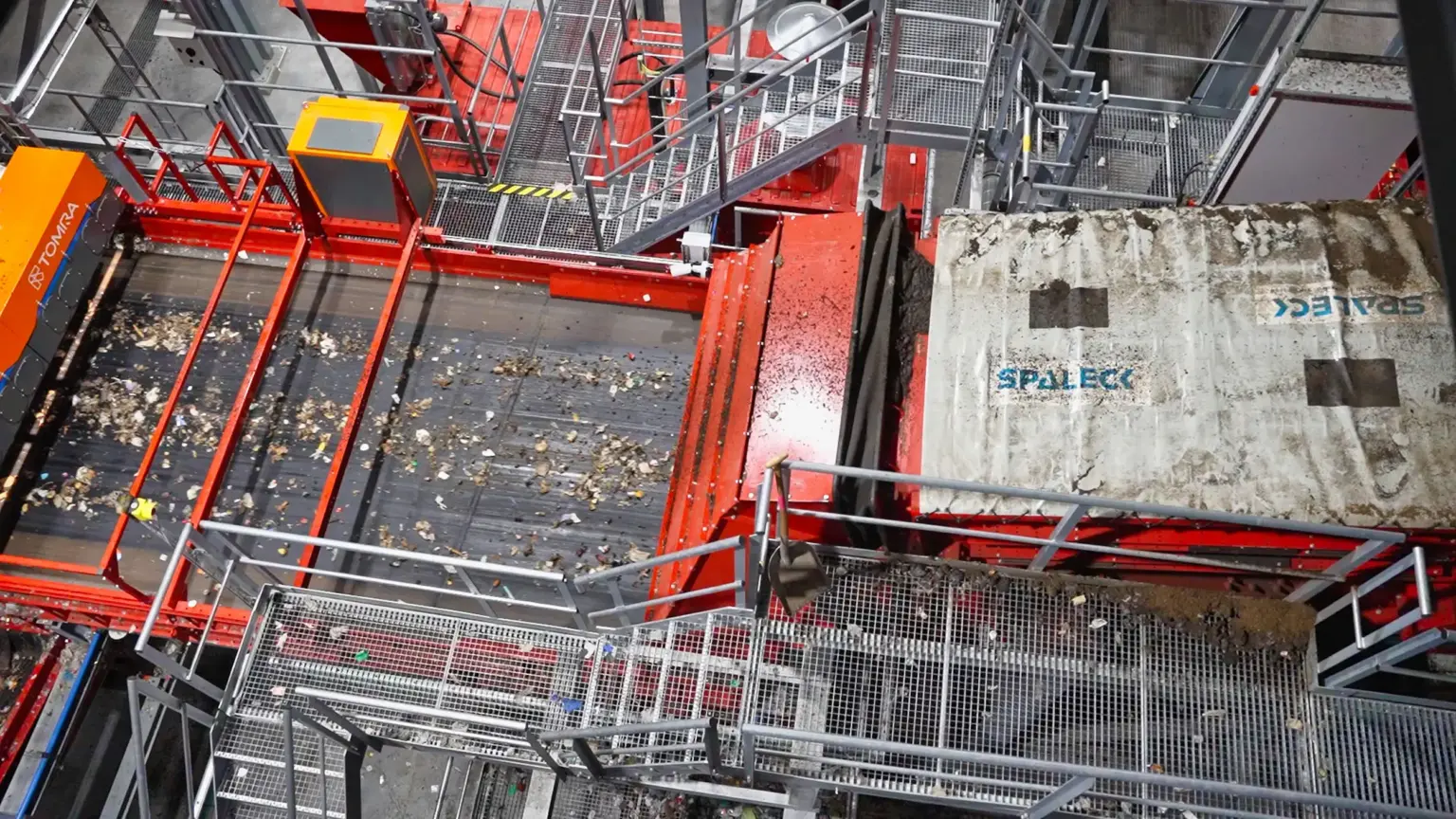
In the processing of household waste as well, tension-shaft screens are used to separate out the fine fraction. Typical screen sizes include, for example, 0–10 mm. This ensures that household waste—which is often damp and very sticky—is optimally prepared for the downstream eddy current separators and NIR sorting machines. Sand, dirt, and unwanted fine particles are reliably screened out, which reduces the load on the sorting process and improves its performance.
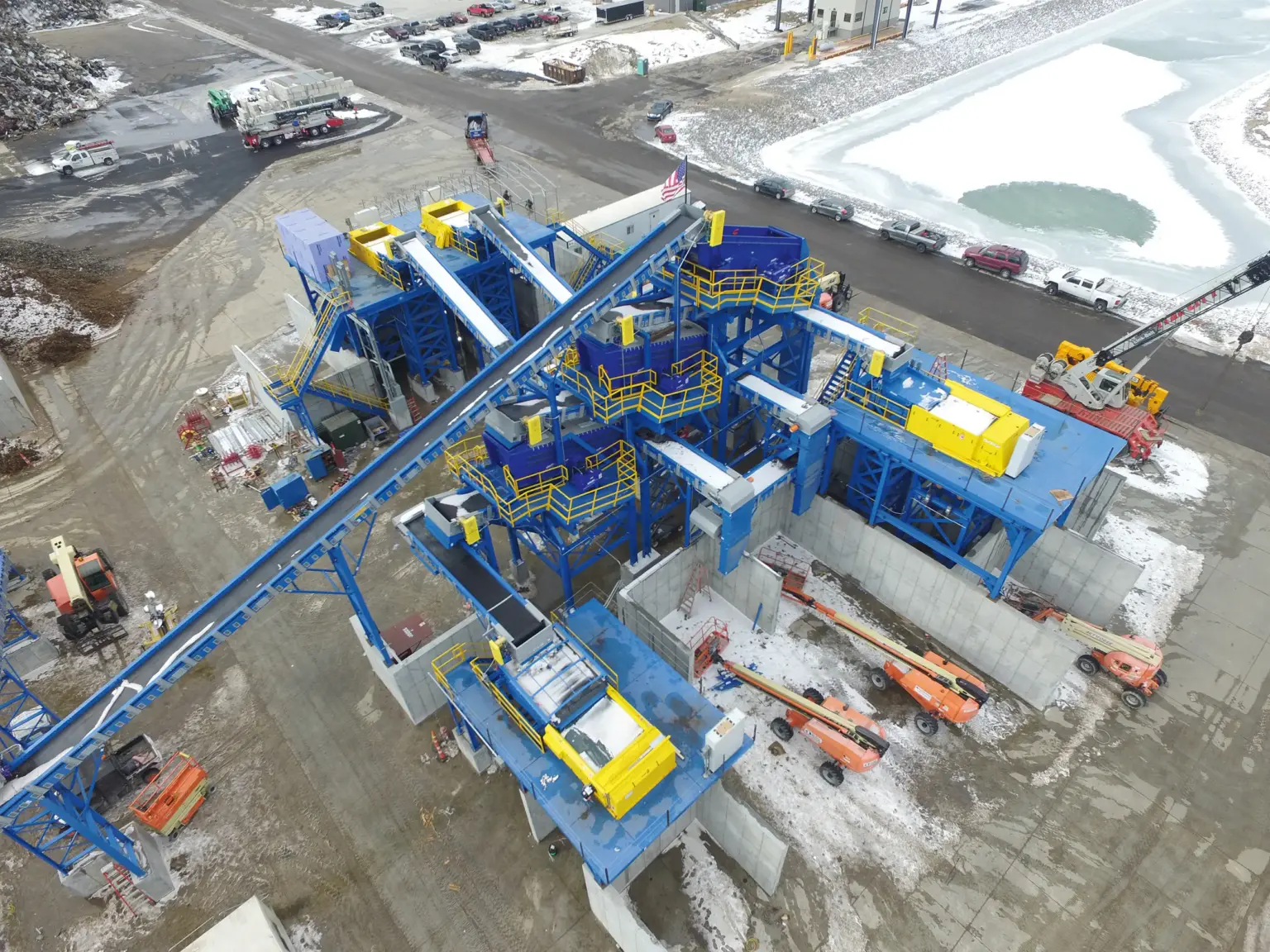
In the recycling process for auto shredder residue, SHF, SLF, and, for example, electronic waste, tension-wave screens reliably classify complex material mixtures by particle size. Fine particles and impurities are screened out so that eddy current separators and other sorting equipment can operate more efficiently and achieve higher levels of metal purity.
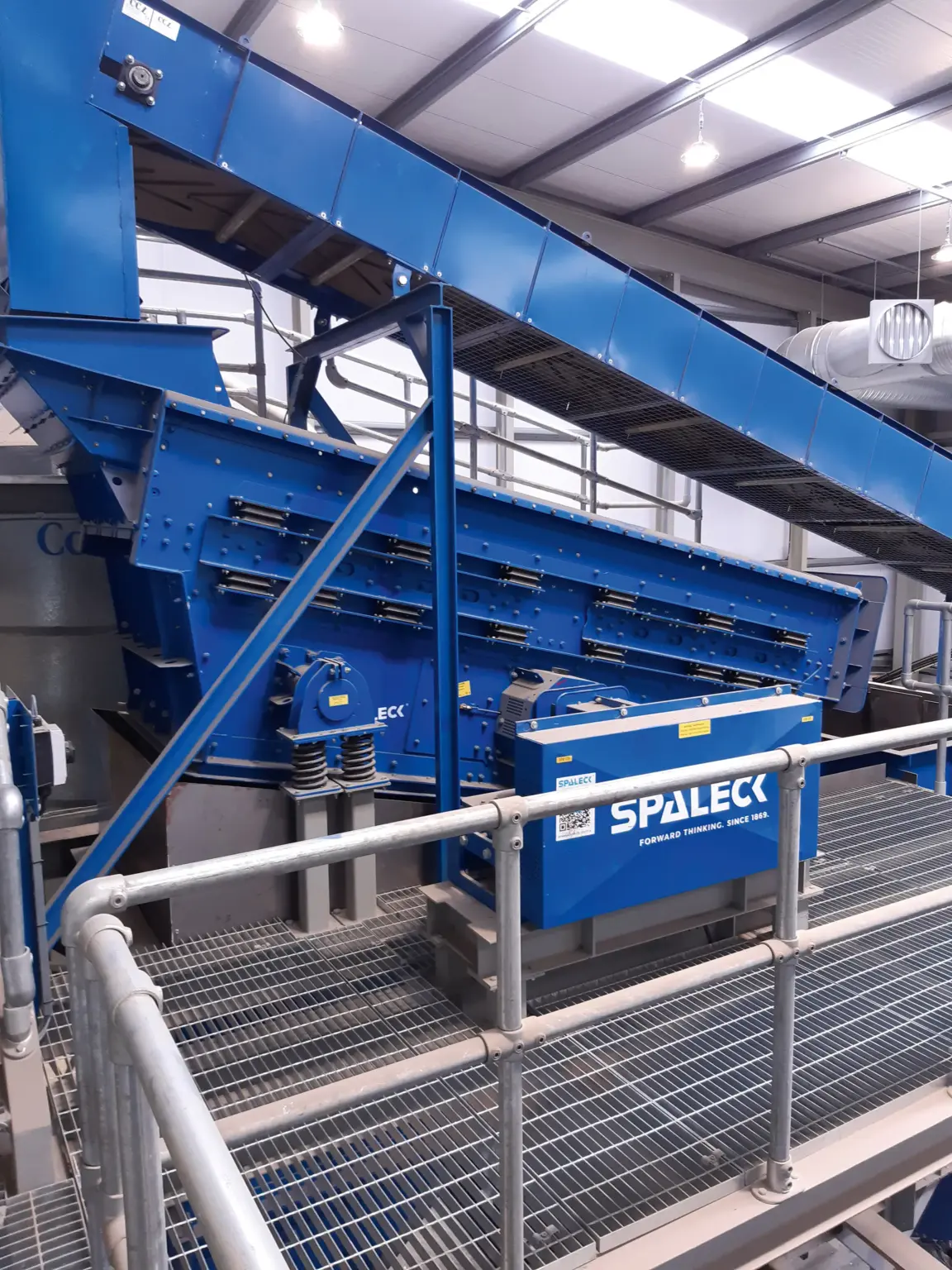
In plastic recycling plants, tension-shaft screens remove fine particles from mixed plastic streams. Fibers, dust, and organic residues are reliably separated. This significantly improves the subsequent processing step.
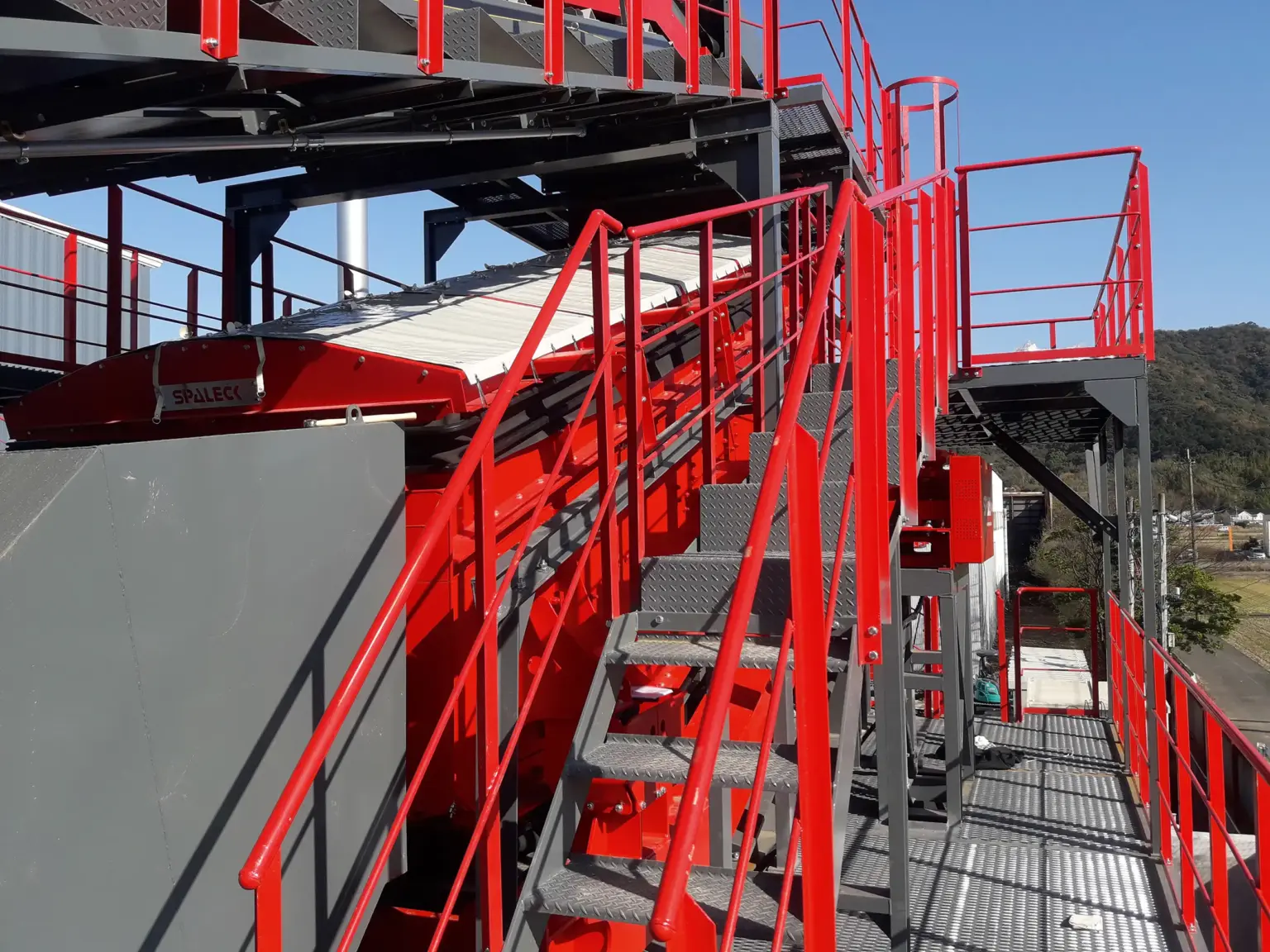
For compost, food waste, and organic materials, the tensioned-wire screen technology ensures cost-effective fine screening despite high or fluctuating moisture levels and adhering particles. The flexible movement of the screen mats prevents the screen openings from clogging and ensures consistent separation year-round. For particularly challenging materials or materials requiring exceptionally high purity, SPALECK also offers additional tensioning shaft cassettes or special screen linings such as the SPALECK AutoCLEAN.
Which solution is right for your processing needs?
High-Performance Components for Your System
Screening Quality
++
Number of sieve fractions
up to 3
Throughput Strategy I
Focus on stable fine screening and reducing the load on downstream sorting equipment
Typical Applications
Metal recycling, household waste, alternative fuels, mixed construction waste, compost
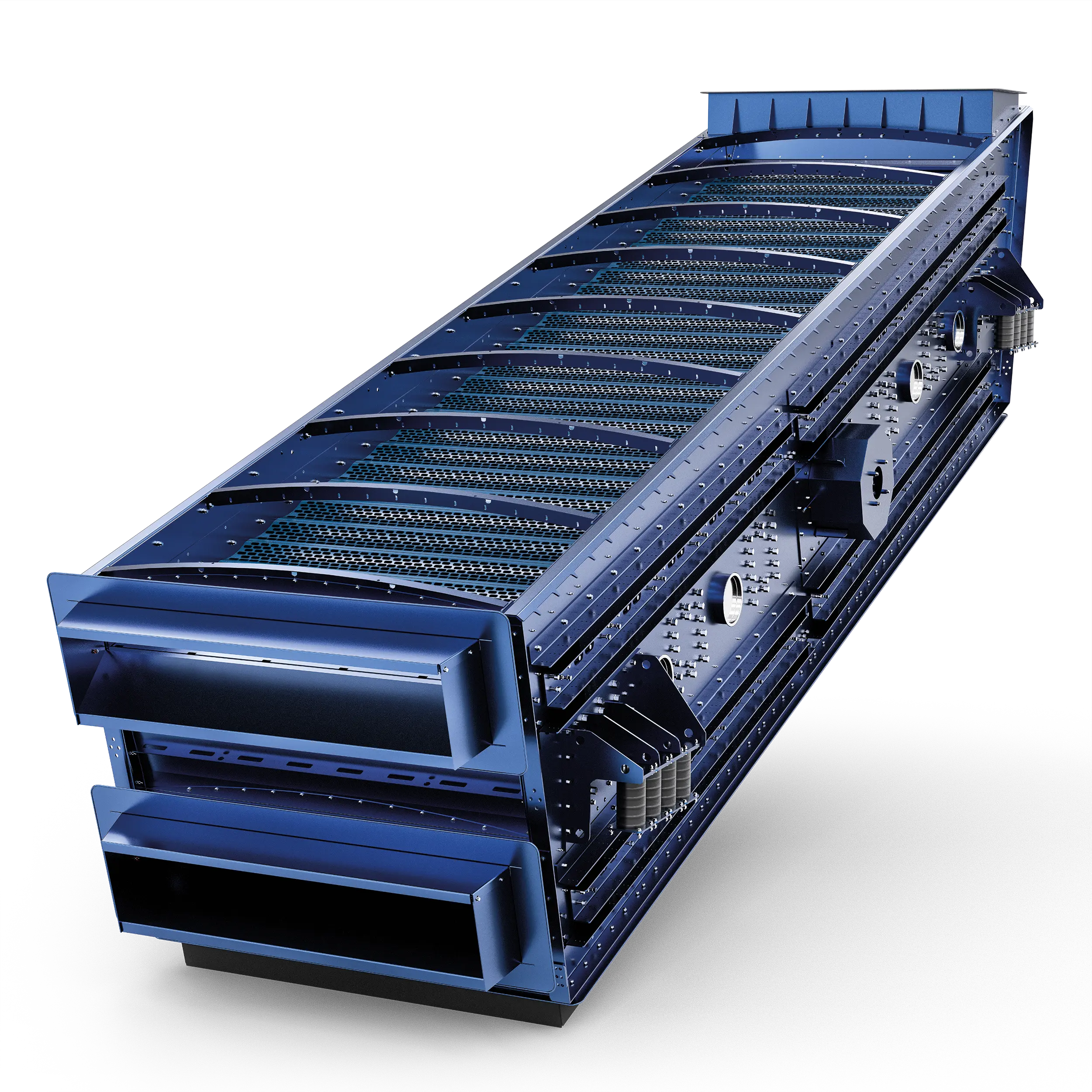
Suitable for relatively undemanding materials
Screening Quality
++
Number of sieve fractions
up to 4
Throughput Strategy
Simultaneous classification of multiple particle size fractions
Typical Applications
Metal recycling, slag, minerals, complex materials
SPALECK tensioned-shaft screens are used wherever precise recycling processes are required: from household waste in Sweden to slag in the U.S., packaging materials in Asia, ASR in South America, and C&D waste in Australia. Would you like to see specific reference projects using your material in your country? We would be happy to show you some relevant reference installations—either in person at our customer’s site or via video call.

You are currently viewing a placeholder content from YouTube. To access the actual content, click the button below. Please note that doing so will share data with third-party providers.
More InformationYou are currently viewing a placeholder content from YouTube. To access the actual content, click the button below. Please note that doing so will share data with third-party providers.
More InformationYou are currently viewing a placeholder content from YouTube. To access the actual content, click the button below. Please note that doing so will share data with third-party providers.
More InformationYou are currently viewing a placeholder content from YouTube. To access the actual content, click the button below. Please note that doing so will share data with third-party providers.
More InformationYou are currently viewing a placeholder content from YouTube. To access the actual content, click the button below. Please note that doing so will share data with third-party providers.
More InformationYou are currently viewing a placeholder content from YouTube. To access the actual content, click the button below. Please note that doing so will share data with third-party providers.
More InformationYou are currently viewing a placeholder content from YouTube. To access the actual content, click the button below. Please note that doing so will share data with third-party providers.
More InformationWith a trial day at the SPALECK TestCenter, you’ll discover what your material is really capable of—and how you can best screen and feed it using a tension-shaft screen machine for sorting and further processing. Take advantage of this free SPALECK service. Just as important: At the TestCenter, we work with our customers to develop solutions for tricky challenges in the recycling process.

Der Tipp für Ihr Projekt
Put SPALECK technology through its paces. Using your materials and on two state-of-the-art recycling lines. At the TestCenter, we develop solutions for challenging recycling tasks every day—always in collaboration with and for our customers.
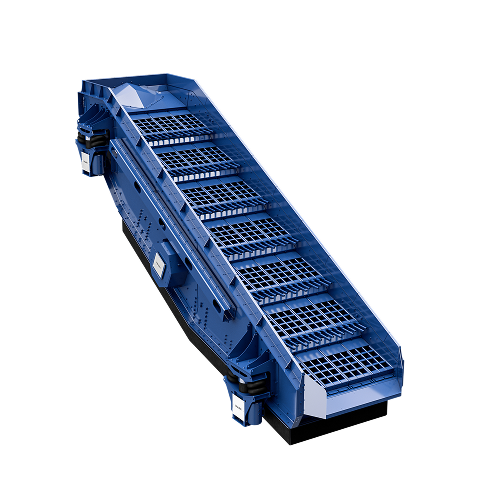
Economic Classification
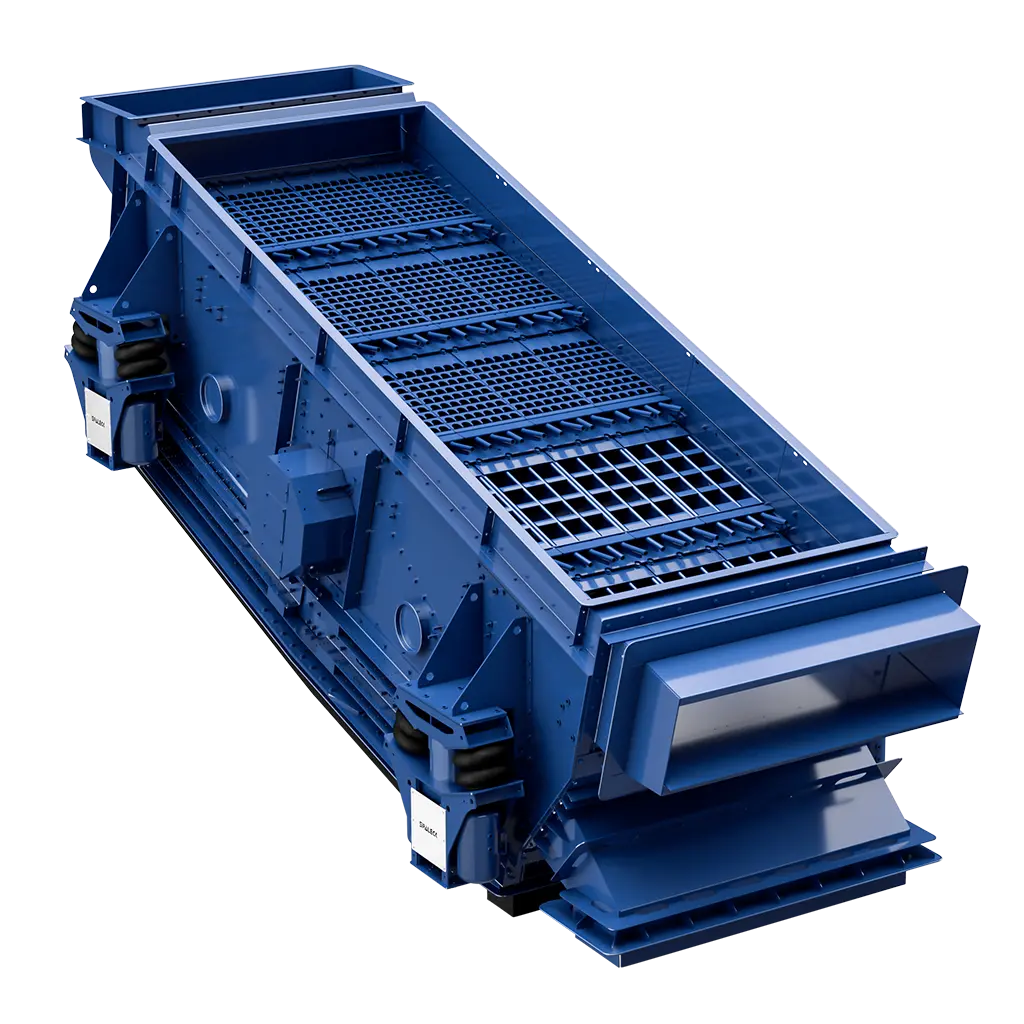
2-in-1: Recycling Screen & Tensioned-Shaft Screen
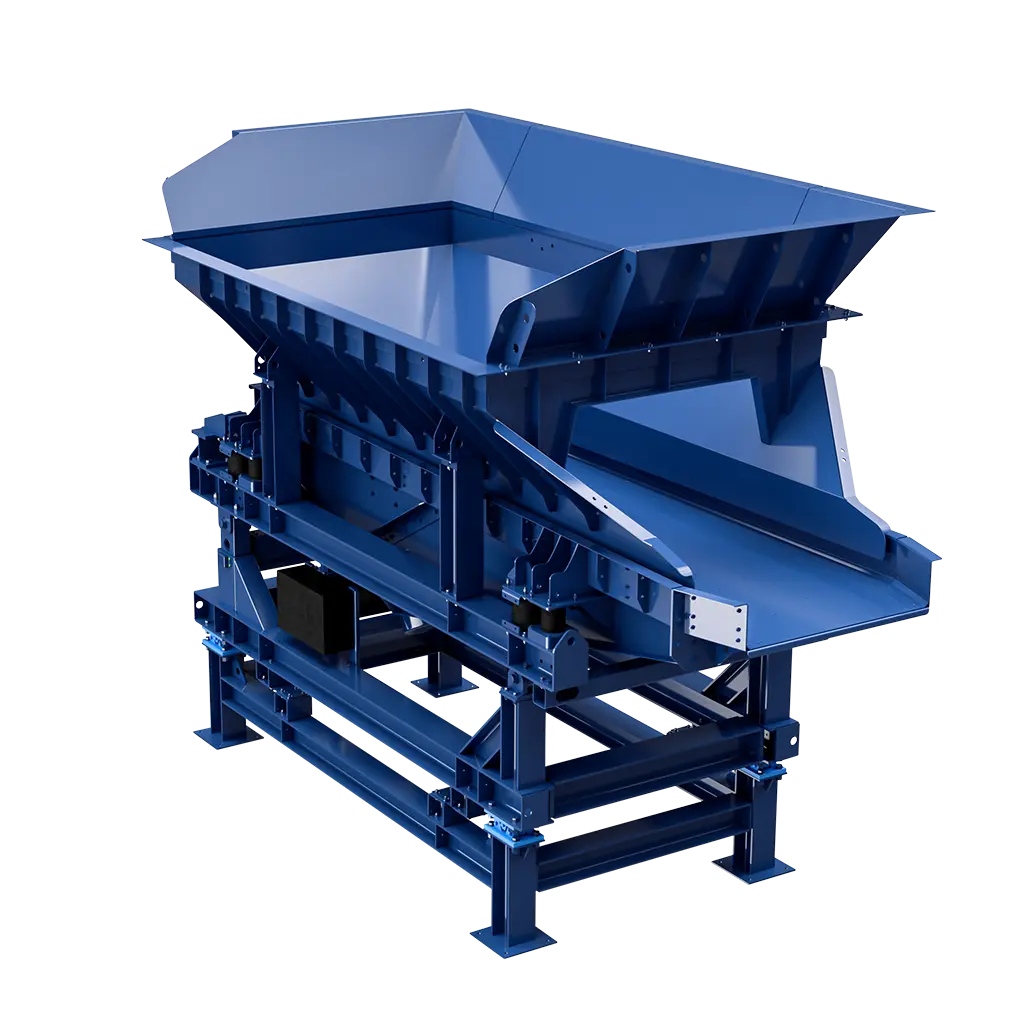
Optimizes the feed for your sorting machines
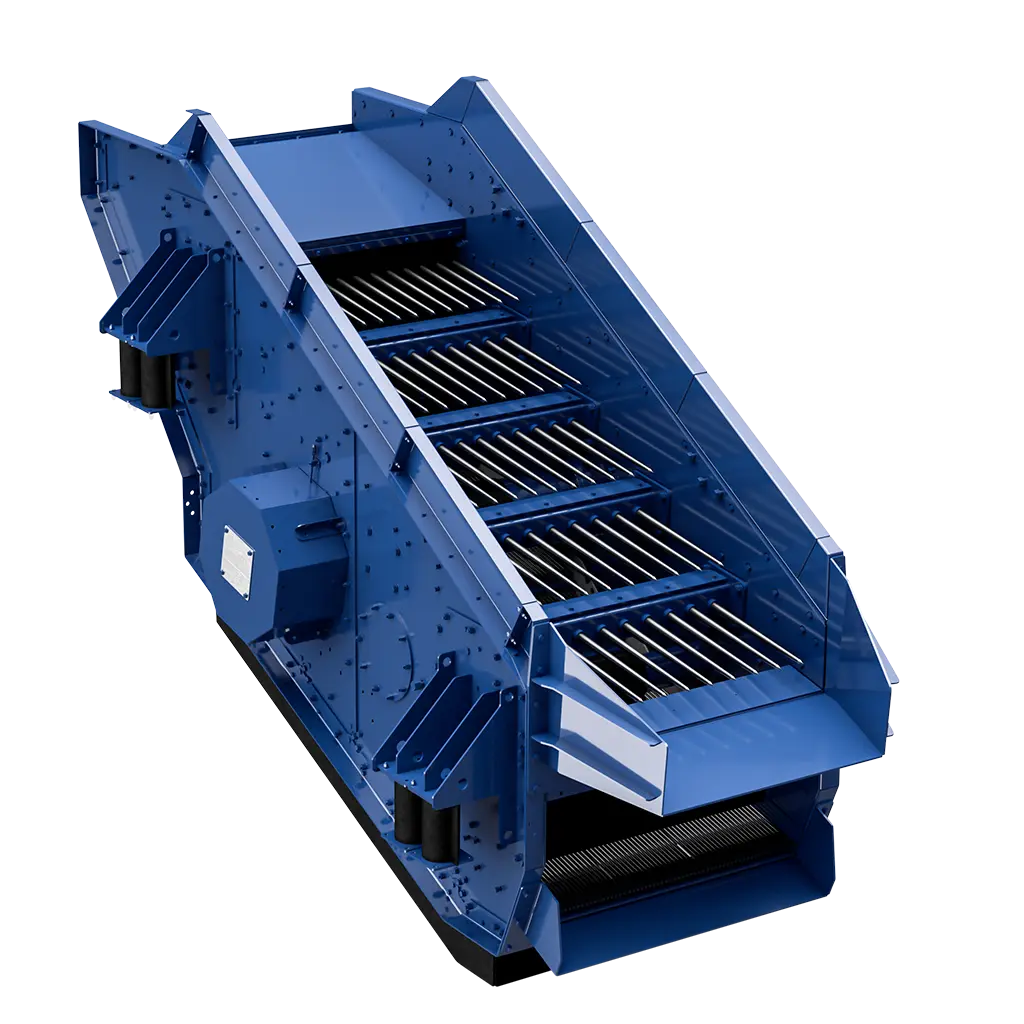
Reliable Coarse Screening & Pre-Separation
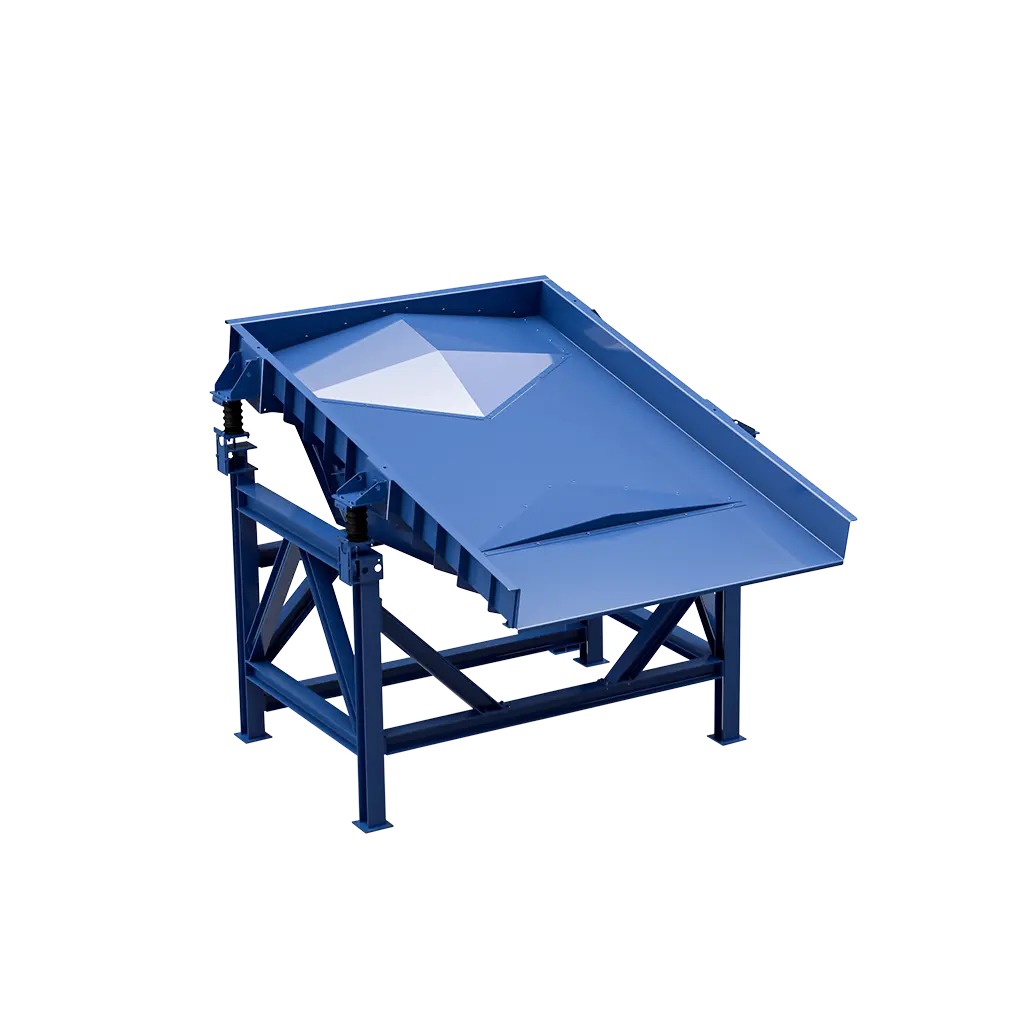
Optimal Material Feed and Distribution
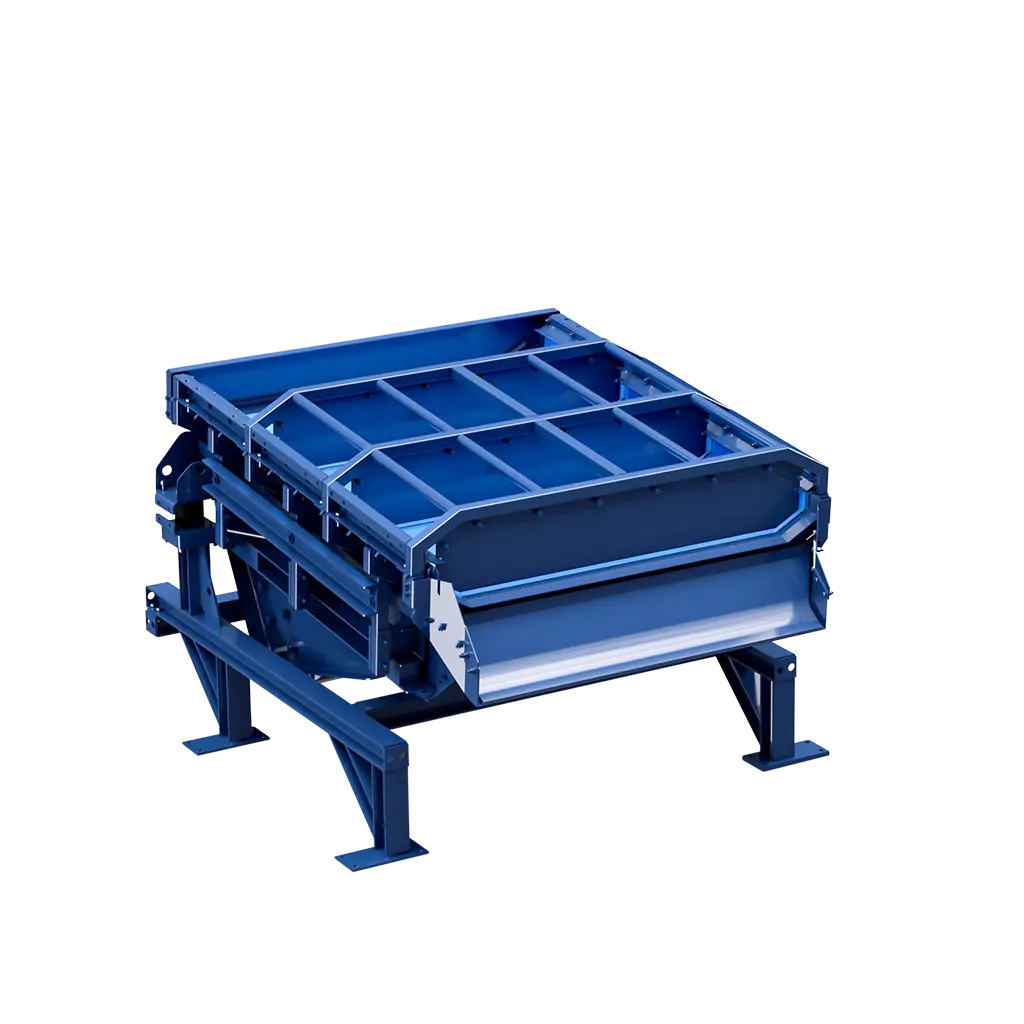
Contaminant-free transport of slag and other materials
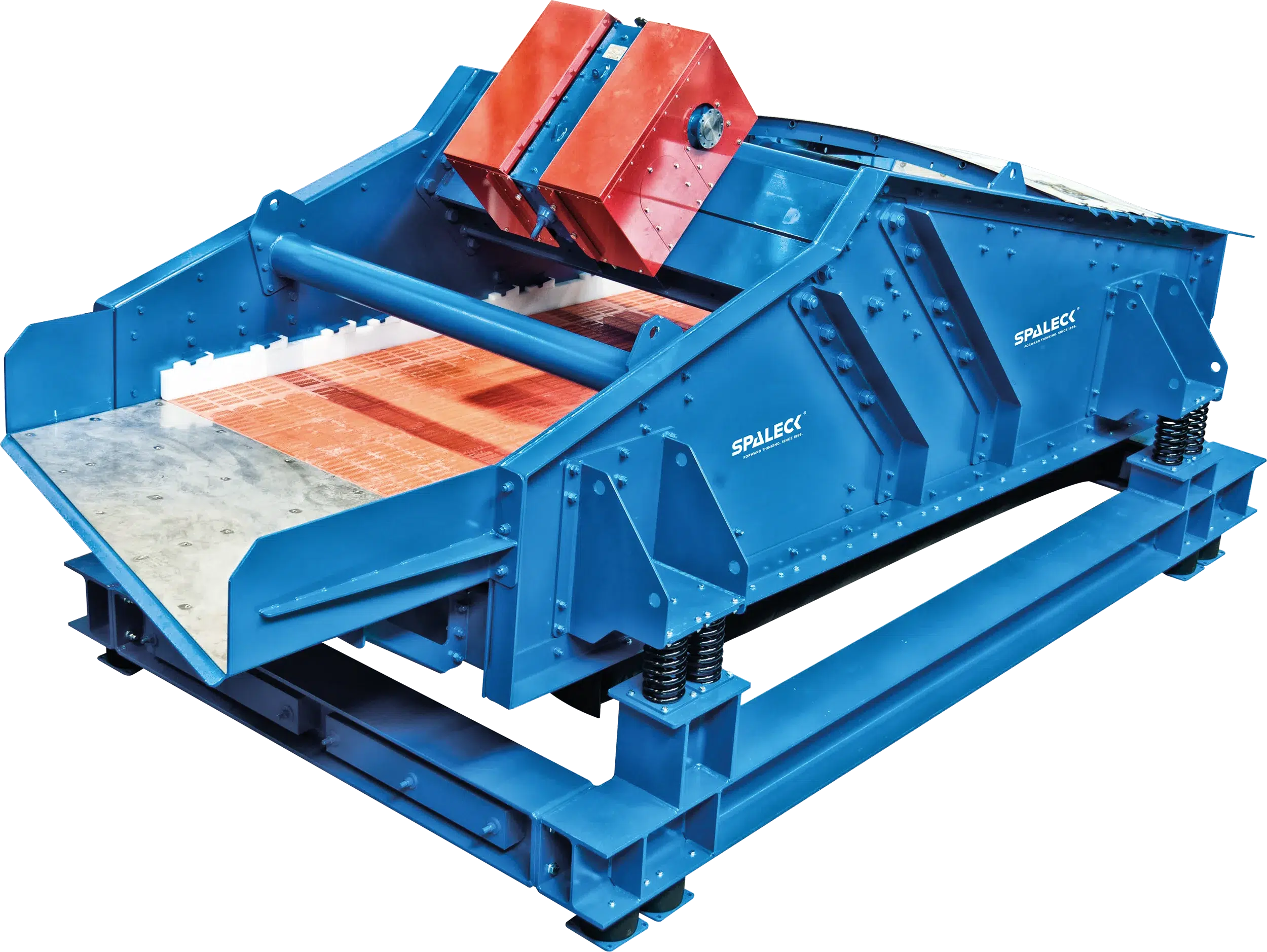
Screens for dewatering material streams
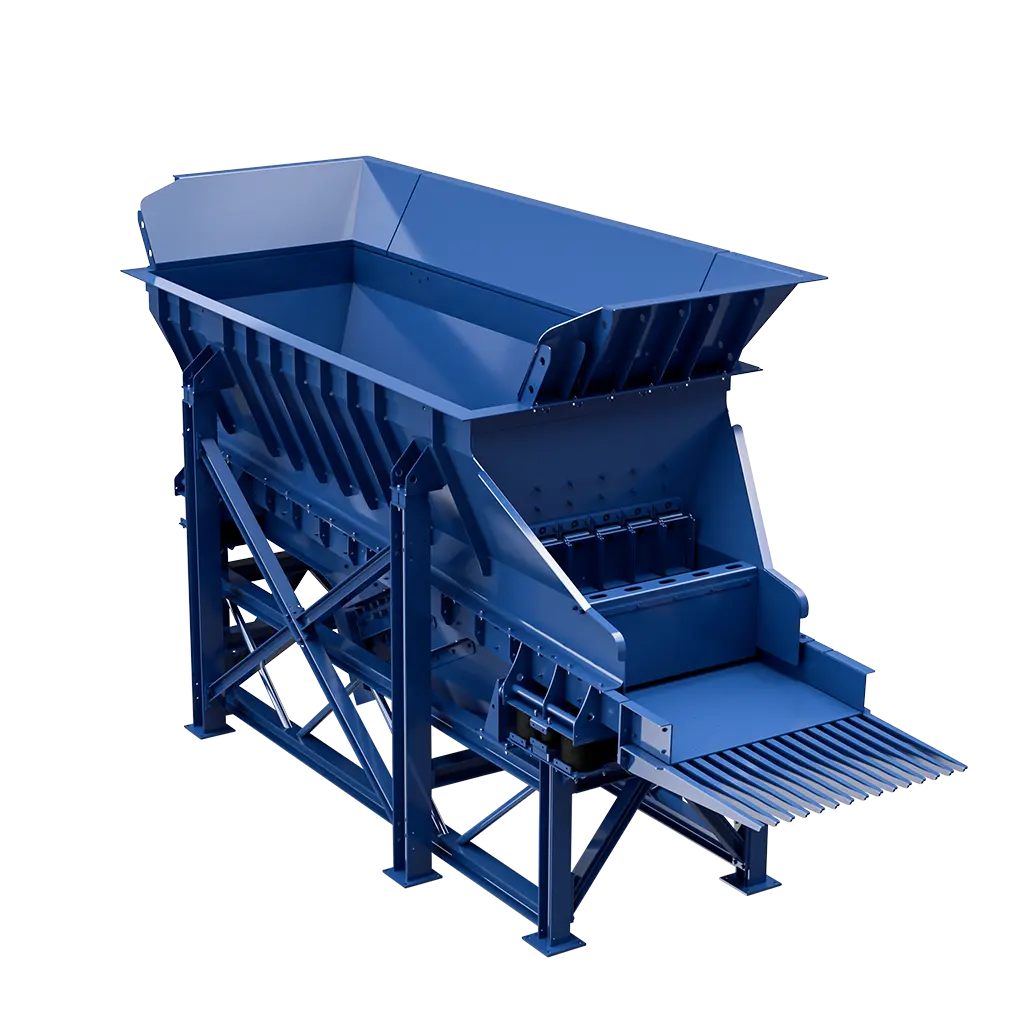
Reliable Material Feed in Your Recycling Process
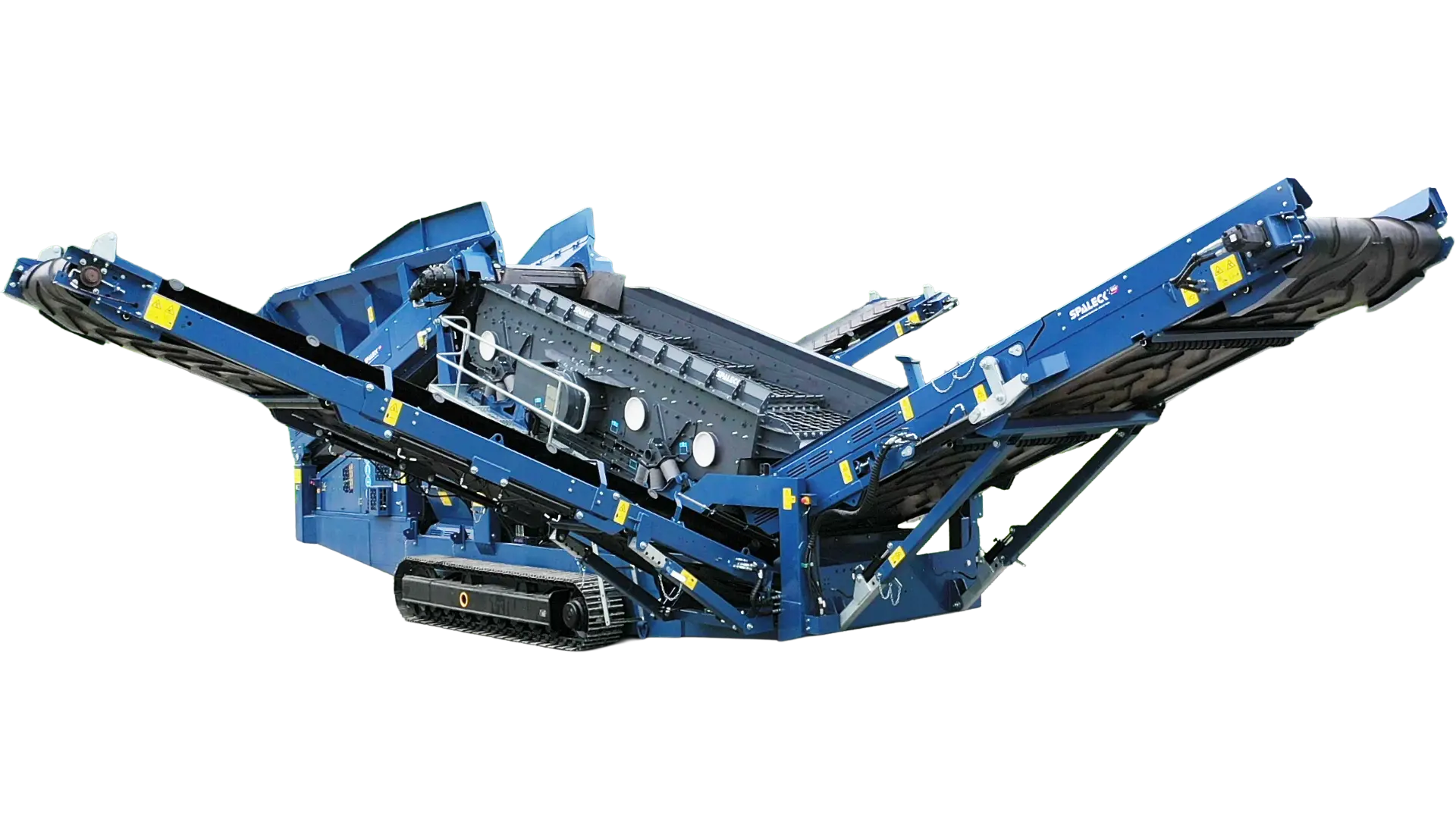
SPALECK Screening Technology—Available Anytime, Anywhere
Here you’ll find the most important questions about tension-shaft screen machines. Do you have another one? Then please feel free to contact us!
The precise design of a tension-shaft screening machine is always tailored to the recycled material. Factors such as the composition of the input material, its moisture content, contaminants, throughput requirements, and the recycling goals associated with the input material form the basis for this. Working with you, we define screening sizes, purity requirements, and throughput rates, and use this information to configure the exact machine settings—from screening panels to amplitude and machine features such as the SPALECK FineSideCOVER (FSC) or our MultiDECK technology with a split push rod. Learn more here about our ModularDESIGN+ concept, which we use to find the optimal screening machine for your material. We’d be happy to test the respective recycling material together with you free of charge at the SPALECK TestCenter.
Precise screening of the fine fraction results in clearly defined particle sizes. For example, if the fine fraction ranging from 0 to 10 mm is reliably screened out, downstream sorting equipment—such as eddy current separators, NIR sorters, sensor sorters, and X-ray sorters—operates more reliably and efficiently as a result. In addition, the system’s cleaning requirements are reduced, and higher material purity levels can be achieved. You can see a good example of the benefits of a tensioned-shaft screen in the reference video on municipal solid waste processing at our Swedish customer Tekniska verken. The video demonstrates how a SPALECK tension-shaft screen reduces the load on the downstream eddy current sorters and NIR sorting processes. You can find all the details about the project here.
The service life of screening mats for Flip-Flow screening machines depends heavily on the recycled material, the Recycling process, and factors such as the abrasiveness of the material stream. In many recycling applications, very long service lives are possible. Thanks to our bolt-free, modular clamping system, individual screening mats can be replaced quickly and easily as needed. You can see how this works in the video on our landing page for tension-shaft screen machines. You can get a competitive quote for replacement screening mats through our spare parts service.
Flip-Flow screening machines are designed for low-maintenance, continuous operation. The self-cleaning effect of the screen mats significantly reduces the need for manual cleaning. Maintenance is usually limited to regular visual inspections and the replacement of individual wear parts after extended periods of operation.
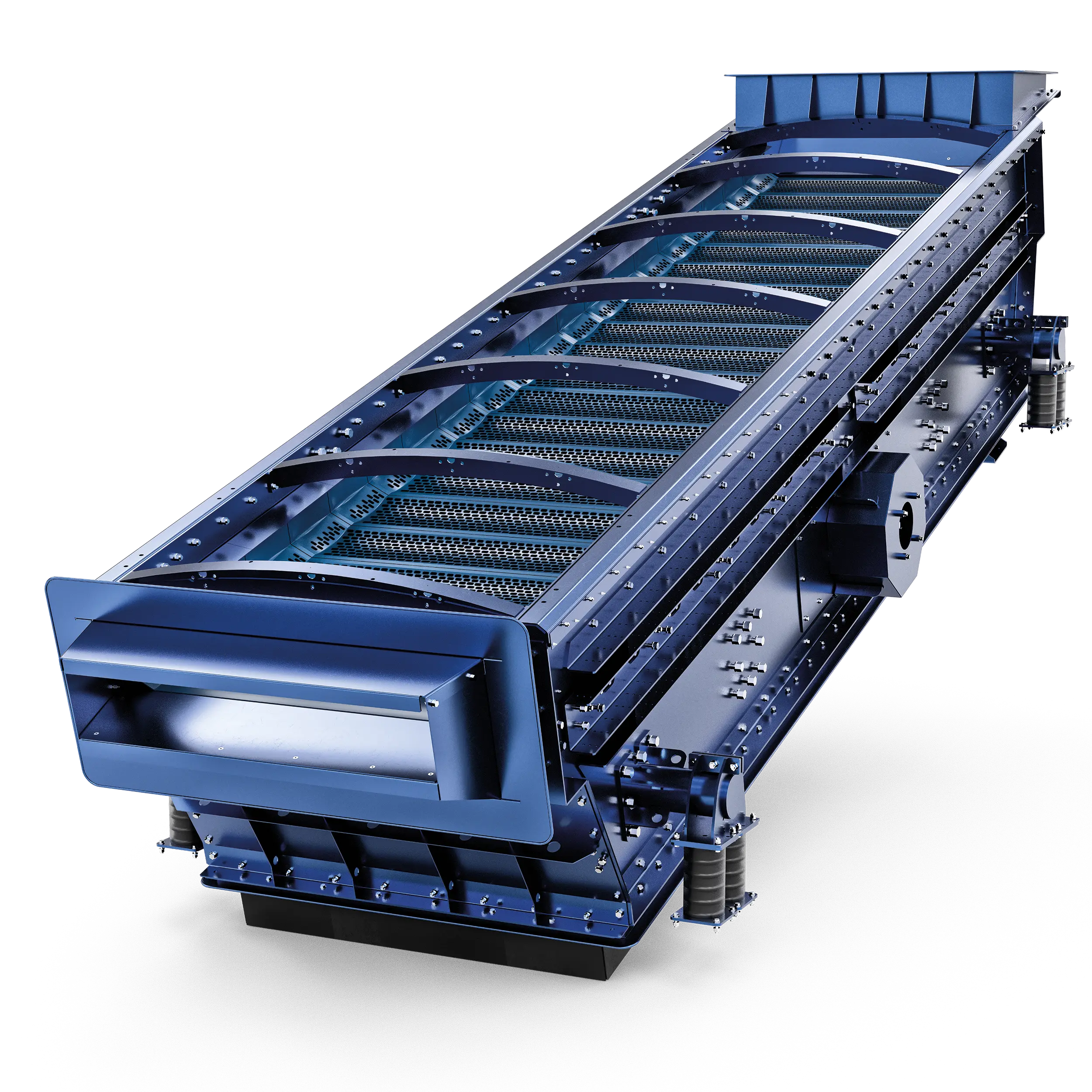
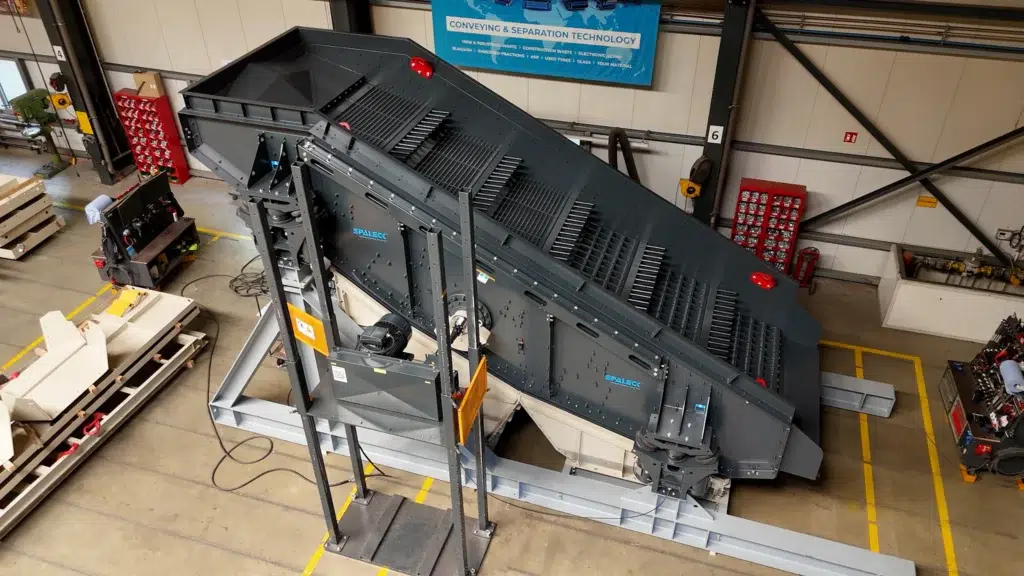
A Flip-Flow screening machine operates with two frame systems that move relative to one another. Screening mats are stretched between the base frame and the dynamic frame. These are stretched and tensioned by the cyclic movements of the dynamic frame. This generates extremely high accelerations in the screening panel. The material is actively loosened, allowing the fine particles to be screened through the mesh openings.
Tensioned-shaft screening panels are robust. They are suitable for a wide variety of recycled materials. They are also used in very demanding recycling applications, such as construction material recycling. While steel screening panels are generally more durable, screen mats made of PU or PVC also achieve very long service lives. We would be happy to advise you on the optimal screening panel for your material.
The screening mats used in Flip-Flow screening machines are made of highly wear-resistant, elastic materials such as polyurethane or rubber. They are specifically designed to withstand high dynamic loads. Depending on the type of recycled material, special abrasive screening mats, for example, may be used. With proper maintenance, damage caused by individual foreign objects can be minimized and service life maximized. Should damage occur, the mats can be replaced quickly and easily. You can find a video on this topic here. You can also view customer feedback from one of Europe’s largest non-ferrous metal recycling plants, in which the customer confirms the low maintenance requirements.
Depending on the machine configuration and screening panels, Flip-Flow screening machines can achieve separation cuts ranging from approximately 0.2 mm to about 50 mm. This makes them particularly well-suited for the precise separation of fine particles in Recycling processes. Depending on whether the machine is a single-deck or double-deck tension-shaft screen, up to three or up to four fractions, respectively, can be produced with a single machine.
Flip-Flow screening machines are used worldwide in a wide variety of recycling processes. Typical screening materials include, for example, materials from metal recycling, incinerator grate ash and non-ferrous concentrates from waste incineration, plastic waste, Compost, Biomass, construction waste, substitute fuels, and mixed municipal solid waste.
In the Recycling process, Flip-Flow screening machines are often operated in series with, for example, Recycling Waste Screens. SPALECK also offers the proven SPALECK 3D COMBI screening machine for this purpose. This machine combines a Recycling Waste Screen on the upper deck and a Flip-Flow screening machine on the lower deck in a single unit.
A Flip-Flow screening machine is a screening machine used to classify fine and difficult-to-screen materials. Flip-Flow screening machines use elastic screening mats that compress and tension very quickly during operation. The screening mats have holes of a specific size through which the target particles can fall and be screened out.
During compaction and tensioning, a so-called “trampoline effect” occurs in the screening mats. During the screening process, the material is constantly propelled upward and loosened.
If the fine grain with the appropriate particle size then falls back onto the screen mat, it can pass through one of the openings in the screen mat.
There is no difference between a tension-shaft screening machine and a flip-flow or flip-flop screening machine. The term “flip-flow” is used in recycling practice and originates from English. Tension-shaft screening machines are sometimes also referred to as flip-flop screening machines.
Recycled materials and the associated recycling processes and goals vary widely. Through targeted screening tests with your recycled materials, we will work together to determine the optimal Machine configuration for your tension-shaft screen.
The tests are valid and robust because they are conducted using realistic industrial quantities of the actual material. This allows for highly reliable conclusions regarding optimal machine design and subsequent Screening results.
Of course, you can also use the material prepared in this way for further testing with the screening equipment manufacturers of your choice. A free screening test at the SPALECK TestCenter using your own material often yields significant benefits for the entire Recycling process, as the tensioned-shaft screening technology is optimally designed.
The moist and sticky fine fraction can often lead to unwanted contamination, blockages, and material carryover during the Recycling process. In this context, Flip-Flow screening machines are less prone to sticking and blockages of the screening areas. With a Flip-Flow screening machine, the dynamic trampoline effect prevents the screening area from clogging. This minimizes the cleaning effort. In addition, moist and sticky materials can be reliably screened out.
The decision on whether to use a single-deck or double-deck tension-shaft screen depends entirely on the material and process. In practice, a SPALECK single-deck tension-shaft screen is usually sufficient, as it can produce up to three fractions. In processing and production processes, such as fertilizer production, double-deck tension-shaft screens are sometimes used. These allow for additional classification steps and produce up to four defined particle size fractions within a single screening process.

You are currently viewing a placeholder content from Vimeo. To access the actual content, click the button below. Please note that doing so will share data with third-party providers.
More InformationYou are currently viewing a placeholder content from YouTube. To access the actual content, click the button below. Please note that doing so will share data with third-party providers.
More InformationYou need to load content from reCAPTCHA to submit the form. Please note that doing so will share data with third-party providers.
More InformationYou need to load content from reCAPTCHA to submit the form. Please note that doing so will share data with third-party providers.
More Information